Ed Hajim has lived a life shaped by extraordinary challenges, unexpected opportunities, and a deep belief in the power of education and personal determination. Separated from his mother at a young age, he spent much of his childhood moving between foster homes, orphanages, and temporary living situations. Despite an upbringing marked by uncertainty and hardship, he went on to graduate from the University of Rochester, earn an MBA from Harvard Business School, and build a highly successful career on Wall Street.
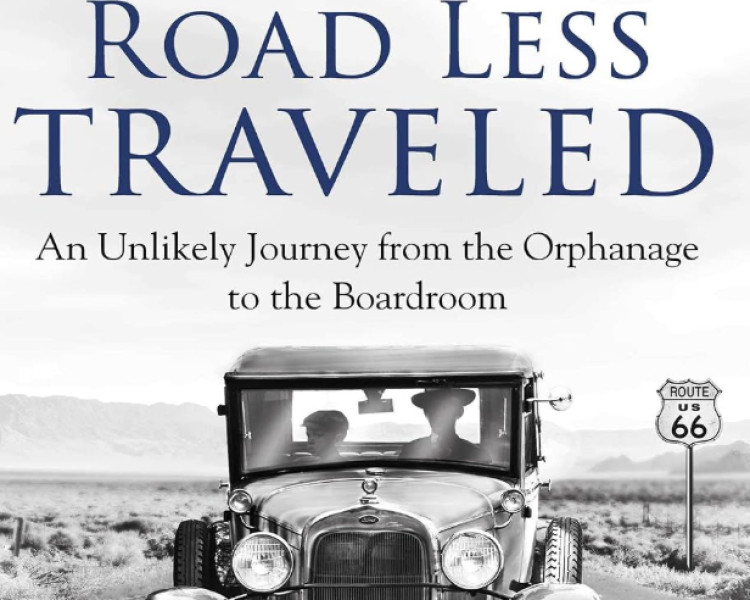
In his books, Ed shares the experiences, lessons, and personal discoveries that shaped both his life and his outlook on the world. His memoir, On the Road Less Traveled: An Unlikely Journey from the Orphanage to the Boardroom, explores his difficult childhood, the complicated history of his family, and the people who helped him find his way. His second book, The Island of the Four Ps: A Modern Fable About Preparing for Your Future, offers readers a different perspective on navigating life's challenges, making meaningful choices, and finding purpose along the way.
Beyond his professional accomplishments, Ed has served as chairman of the University of Rochester Board of Trustees and has remained deeply committed to education, philanthropy, and giving back to the next generation.
In this conversation, Ed reflects on the experiences he kept private for much of his life, what ultimately motivated him to share his story, the importance of the people who believed in him, and the lessons he hopes readers will carry with them. He also discusses why education became one of the guiding principles of his life, how his childhood shaped the family he would eventually build, and why he believes the most important question after facing a setback is not "Why me?" but "What's next?"
Your childhood involved enormous uncertainty, including being separated from your mother at a very young age. How did those early experiences influence the way you understood the world around you?
My early childhood did involve an enormous amount of uncertainty. However, having to live with that uncertainty at a young age and survive it has given me the ability to be relatively comfortable during uncertain times. Many of the disadvantages of my early childhood have become advantages, including my ability to be more comfortable with uncertainty than most of my peers. In fact, these early experiences made me realize that life is normally very uncertain.
You moved between numerous homes and institutions growing up. What did constantly having to adapt teach you about people and your own ability to navigate unfamiliar situations?
For the first 18 years of my life, I lived in numerous hotel rooms, motel rooms, foster homes, and orphanages. I had to adapt to a number of very difficult situations, including attending five different Catholic grammar schools. These experiences greatly increased my ability to adapt. They taught me how to get along with many different people and how to handle unfamiliar situations. Simply put, they increased my adaptability, a quality that helped me later in life when navigating similar unfamiliar situations.
Your memoir explores some painful discoveries about your family history. What motivated you to revisit those memories and share them publicly?
When I was 18 and left the orphanage to attend the University of Rochester, I decided to bury my background. I was ashamed of where I had come from, and I did not want any sympathy or special treatment. I kept many of my secrets until my early 70s.
A confluence of events eventually led me to reconsider my decision. I was elected chairman of the University of Rochester Board of Trustees, selected to become a member of the Horatio Alger Association, and encouraged by my wife and family, who wanted to know more about my journey. To become a member of the Horatio Alger Association, one must fully disclose their early hardships, as their background will be shared publicly.
Because of this experience and the continued encouragement from my family, I decided to attempt to write my autobiography. It was very painful, and I had to have my daughter write the first draft of the section covering my early life. Given how far I had come, I felt it was the right time to confront and better understand my early life and its effect on me.
When you reflect on your younger self, what do you understand now about that child that you could not have understood at the time?
When I reflect on my younger self, I now recognize that a young person who has no control over his life must learn to handle whatever comes his way. Those experiences have a major effect on an individual's personality and capabilities. I understand that now, but I could not have understood it as a child. At the time, I could not have realized that I was developing qualities such as adaptability, resilience, and perseverance by going through difficult times.
Despite the difficulties of your upbringing, you found opportunities through education and relationships with people who believed in you. Who helped change the direction of your life, and what did their support mean to you?
There were many people who believed in me and helped change the direction of my life. My father abandoned me a number of times, but he believed in me and my ability to succeed. The headmaster of the orphanage in Yonkers encouraged me to pursue my dream of attending a private college. During my freshman year at the University of Rochester, my mechanical drawing professor became my mentor and guided me throughout all four years.
All of them stressed the importance of education, which became one of my mantras. Without their support, I do not believe I would have been able to make the progress I did. Many others also helped me along the way, including professors at Harvard Business School and senior Wall Street executives.
You eventually built a family of your own. How did your childhood experiences shape the kind of husband and father you wanted to become?
Because of my childhood experiences, I developed an ideal picture of the family I wanted to have. I wanted the marriage and family life that I had not experienced growing up.
To become the husband and father I wanted to be, I knew I would have to devote the necessary time and energy. I tried to make sure my wife and children received as much of me as they needed, both through time spent together individually and through regular family experiences, such as vacations.
When you learned more about your family history later in life, did it change your understanding of your father or the decisions he made?
Delving into my early life greatly helped me understand my father and the decisions he made. Many people have asked me if I hated my father because he abandoned me a number of times. I loved my father because he loved me and tried to support me.
When I examined my father's life and the difficulties he faced, I came to understand that he did the best job he could. He lived during a very difficult time and experienced a number of significant misfortunes, including losing everything in the Crash of 1929. In his own way, he tried to be the best father he could be, always telling me that I was very special and that he was sorry he could not do more for me.
Your story is often described as an example of overcoming adversity. Are there aspects of your experience that you think get overlooked when people focus primarily on your professional success?
It may be somewhat self-serving, but I believe what is often overlooked is the fact that I have also had a reasonably successful family life. I have been married for over 60 years, and my three children all earned advanced degrees and now have families of their own.
I have also been involved in educational philanthropy while maintaining a successful professional career. I was able to accomplish these things while overcoming the anger that came from my childhood and the question I repeatedly asked myself: "Why me?"
What was the most difficult part of putting your life story into a book, particularly when it meant revisiting memories you had carried for decades?
The most difficult part of putting my life story into a book was describing my early life. When I began reading the letters my father had written to me, as well as the letters I had written to him, I had trouble handling the emotions because I had buried those memories for so long.
I then had to decide how much I wanted to disclose and how I wanted to portray my father and the foster parents I had lived with. This required a great deal of painful effort as I tried to be as factual as possible while dealing with the emotions involved.
After sharing your story with readers, what do you hope people come to understand about their own histories, even if their circumstances are very different from yours?
There are three things I hope readers take away from my story.
First, anything is possible. If a child with no parents and little to no support can accomplish what I have, then anyone can achieve great things.
Second, education is the solution to almost everything. It truly changed my life and is the reason for my success.
Third, never be a victim. In my book, there are times when I experienced setbacks that were my fault and others when they were not. In every case, I focused my energy not on being a victim but on asking myself, "What's next?" That approach worked out for me.
I would also like readers to realize that life is a juggling act involving yourself, your family, your work, and your community, including giving back. You will always have a few balls in the air.