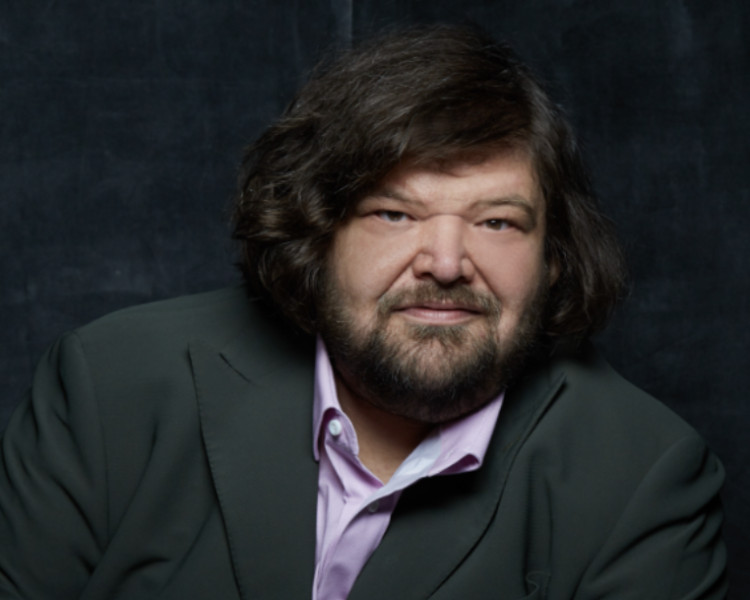
In "Blaze Without Burning", poet William May leans into the tension between intensity and restraint, crafting work that feels both incendiary and controlled, as if each line is holding something back just long enough to make it burn brighter. Across the collection, May explores themes of survival, memory, and emotional weather systems that shift without warning, inviting readers into a space where language becomes both shelter and spark. In this conversation, he reflects on the discipline behind his imagery, the quiet mechanics of his voice, and why poetry, for him, is less about explosion than it is about what continues to smolder after the flame has passed.
Your work often explores the complexities of the human experience. What initially drew you to poetry and writing as a means of expression?
Much of what first pushed me towards writing was, ironically, the difficulties I had learning to read. As a dyslexic child, I struggled when I was first being taught to read, and this inspired a drive in me towards literacy that translated into a love of reading; once I received appropriate instruction and was capable of gaining real proficiency in the skills of reading and writing, I cherished those gifts implicitly and became a voracious reader almost immediately. In a way though, I still have to question just what it was that inspired me to feel that drive. I am certain I had equal difficulties in math, for example, but was never compelled to explore and master it in the same way.
Every writer has a unique creative process. What does a typical writing day look like for you, and how do ideas first begin to take shape?
I am a fairly prolific writer, and I owe this to keeping a routine. In general, I write in the evening, sitting down at my desk to write at least one new poem, but often more than that. Often, for me, a poem can start with some small bit of language that I have had in my head, or, on another day, with an observation, or it can just be me releasing some opinion or emotion that has not been expressed. I am not particularly precious about ideas. Inspiration, I think, shows up when it knows it is going to be put to use; in other words, the best way I’ve found of being certain that the ideas keep flowing is by doing the work each day. There are, on occasion, of course, days when I sit down and have to wait for an idea; most of the time this passes fast, if I just sit at my keyboard with a document open, but if I find I am not getting anywhere, I just write about not being certain what to write.
How have your personal experiences influenced the themes and subjects that appear throughout your work?
Blaze without Burning is very much built on personal reflections. The poems were collected from pieces that I wrote during a period of time shortly after my Father had passed away. At the same time, my partner’s mother was in decline, as well, essentially bed-ridden in a nursing home. A lot of the poems are connected with the emotions around facing those realities. There are, obviously, other themes that come through in the work, most of which I can connect to various aspects of my life at the time, but I feel like the sense of loss, loneliness, and grief are the essential drive for this book.
Poetry has a way of capturing emotions that can be difficult to express otherwise. What do you believe poetry can accomplish that other forms of writing cannot?
My personal definition of poetry (most any poet needs one) is language being used to do what language usually cannot or will not do, which sounds like a bunch of bunk unless you can point towards something concrete and meaningful. Fortunately, I think poetry is ripe with examples of the ways it uses language that moves outside of its ordinary functions. We can discuss, for instance, the impact of musicality on language, how rhyme and rhythm can entrain the reader to expect a certain pattern, and how this creates a certain type of experience for the reader. Consider, also, how the shape of a poem on the page can serve to further what it is communicating in ways that move beyond what language would usually do, providing means for expressing things that are essentially outside the reach of language under ordinary circumstances just through the poem's visual presence.
Many readers seek connection through literature. What do you hope readers take away after spending time with your poems and writings?
Poetry, I believe, is a way of crafting experiences for others. My intention as a poet is not so much to communicate an idea or express my feelings, but instead to use language as a tool for building an experience. I want a reader to feel as if they have not simply enjoyed a poem, but have, in some real sense, taken a kind of internal journey.
Were there any particular authors, poets, or life experiences that played a significant role in shaping your voice as a writer?
Voice is quite an odd thing, and difficult to fully dissect; indeed, one of the great difficulties is that voice seems most influenced by things from our ancient past, from when we were quite young and impressionable, from a time we might not even fully recall. I believe that A. A. Milne is a significant influence on me, as I know his work was read to me extensively as a child. C. S. Lewis and J. R. R. Tolkien both have had an impact in various ways. I’m certain Weird “Al” is in there, if you want to know (I can recall my parents playing his albums on cassette in the car when I was a kid in the eighties), along with other childhood influences, the Muppets, Sesame Street, all that sort of stuff. This may seem like a random list, but I could probably pull out poems and point towards linguistic gestures that echo any one of these, and many more.
In a fast-paced digital world, what role do you think poetry continues to play in helping people understand themselves and others?
Well, I have to acknowledge, despite what I may wish, that I know that there are many people for whom poetry doesn’t really play much of a role, if any at all. I could sit here and lament that, though I certainly won’t deny that if I were to follow my poet’s heart, it would guide me to pontificate upon the point, and if I were to do that, it would be because I do think poetry has so much to offer. For me, poetry is a way to connect with human experiences that I cannot share in any other way, which really isn’t all that different from what most people are seeking through a lot of internet activity. Poems can do many different things, but there is always, at the core, something human being shared, and allowing ourselves to experience that can be very valuable in and of itself.
Looking back on your journey as an author and poet, what lessons have been the most valuable both creatively and personally?
I think the one thing that really matters most, if I am honest, is just persistence. The fact is, it would have been very easy for me to decide, at various points in my life, to just set aside my writing and do most anything else. Instead, I decided to focus on my craft, and I feel like that focus has paid off for me, especially creatively. Choosing to dedicate myself to writing as a practice and continuing to do that despite any setbacks is really what has been and is propelling me forward.
What challenges have you encountered throughout your writing career, and how have those experiences influenced your perspective on creativity and perseverance?
When I was much younger, I thought that I had a lot of support for my career. I trusted that I was on an inside track, as it were. When I realized that wasn’t really true, it took a lot out of me, really. I spent a long while kind of wandering aimlessly, and not certain how to proceed. I had envisioned a certain path for myself, and it was not the path that I discovered I was actually walking, and that left me feeling really lost. At a certain point, it was just the decision that I needed to start writing each day that changed things, if I am honest. Writing each day gave me a sense of structure, and I was amazed, once I began, to discover just how much my writing began to flourish. Over a month, I would find that my poems would transform in various ways, as I started to play and experiment. It was by getting back to the work itself that I found my footing and began to make my way forwards once more.
What projects, themes, or ideas are currently inspiring you, and what can readers look forward to from you next?
I have a couple of larger projects that I am hoping I can get out to readers in the near future. One is a full length poetry manuscript, This Place Beside Me. I only finished work on this book fairly recently and have just begun to seek a publisher for it, but I am hopeful that it will find a home. The other is actually my first novel, and I am pleased to say that I do have a bit of interest in it, potentially, though nothing is certain at this point and I probably shouldn’t jinx it by saying anything more…